
Oil price dives as US and Iran pause attacks
Oil price dives as US and Iran pause attacks - Published The price of oil has fallen sharply on hopes that a pause in attacks between the US and Iran...
Key points
- Oil price dives as US and Iran pause attacks - Published The price of oil has fallen sharply on hopes that a pause in attacks between the US and Iran could help lead to a resolution to the conflict.
- The fall came after the US ambassador to the UN said attacks on Iran had been halted for a second night in a row to give "talks some space".
- The outbreak of the Iran war triggered a sharp rise in oil prices as the conflict led to the effective closure of the Strait of Hormuz, a key shipping route which usually carries about 20% of the world's oil and liquefied natural gas (LNG).
- When Iran and the US signed a memorandum of understanding in June to halt military operations and reopen the strait, the price of oil fell back to pre-war levels of around $70 a barrel.
What happened
More photos
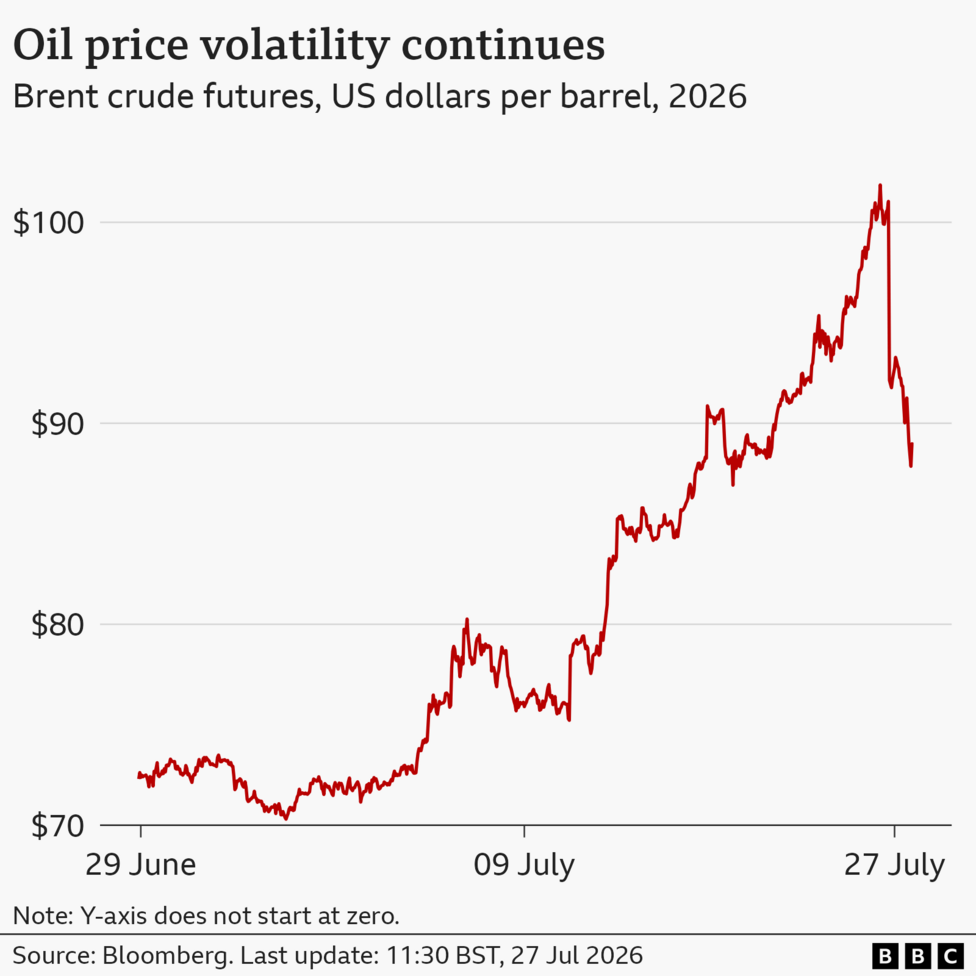
Oil price dives as US and Iran pause attacks - Published The price of oil has fallen sharply on hopes that a pause in attacks between the US and Iran could help lead to a resolution to the conflict. The fall came after the US ambassador to the UN said attacks on Iran had been halted for a second night in a row to give "talks some space". The outbreak of the Iran war triggered a sharp rise in oil prices as the conflict led to the effective closure of the Strait of Hormuz, a key shipping route which usually carries about 20% of the world's oil and liquefied natural gas (LNG). When Iran and the US signed a memorandum of understanding in June to halt military operations and reopen the strait, the price of oil fell back to pre-war levels of around $70 a barrel. The conflict between the US and Iran - and its impact on oil - has pushed up the cost of fuel such as petrol and diesel in many countries. In June, the European Central Bank opted to lift its key interest rate for the eurozone for the first time in almost three years, noting that the conflict was "generating inflation pressures".